

If you’ve ever thought, “I want a side hustle, but I do not want to acquire a new personality,” you are going to like this.
Because how to make money with Suno is not about becoming a musician. It’s about becoming the person who can deliver usable audio fast, the same way Canva turned normal humans into “designers” overnight.
You are selling speed, vibe, and convenience.
In other words, you are selling “Here, I fixed your content problem.”
And the best part is you can start with a laptop or phone, a few repeatable prompts, and exactly zero knowledge of what a chord progression is. If you know what “upbeat” feels like, you are already qualified.
This post is a practical guide to making money with Suno as a freelancer, using simple offers like podcast intros, YouTube themes, and local business jingles. No studio. No gear. No “I have always dreamed of being a producer” monologue required.
What Suno Is, What It Does, and Why People Will Pay You for It
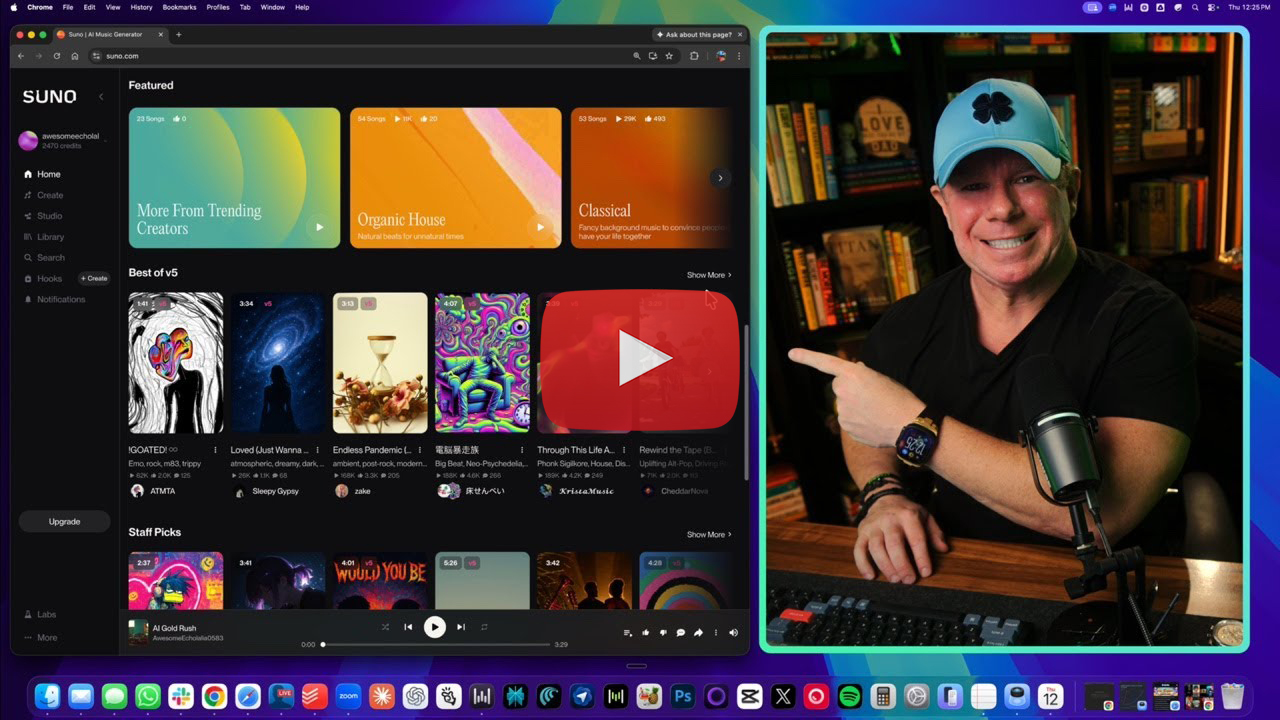
Suno is an AI music generator that can create full songs with vocals and instruments from a prompt. Think “ChatGPT for complete songs,” except it outputs something you can play out loud and immediately annoy your family with.
Here’s what’s important for money:
Clients don’t pay for “art.” They pay for a result that helps their business or content.
They want:
- A podcast intro that sounds real, clean, and branded
- A YouTube theme that’s short, catchy, and consistent
- A jingle that makes a local business feel bigger than it is
- Background music that doesn’t trigger copyright issues and doesn’t distract from voiceover
You are not selling “music.” You are selling “done.”
Tiny laugh break: The internet is basically one giant marketplace where people will pay you to finish things they started. Half the economy is powered by unfinished dreams and half-written captions.
CTA #1: Your 30-minute “proof it works” test
Today, generate 10 tracks:
- 3 podcast intros (different genres)
- 3 YouTube theme stings
- 3 local business jingles
- 1 “just for fun” song (because you’re a human, not a spreadsheet)
Save the best 3. Those become your first portfolio.
The Fastest Path to Your First Paid Suno Gig
The biggest mistake beginners make is trying to offer everything. That’s like opening a restaurant and saying, “We serve food.”
Yes, but are you tacos or sushi or a $19 salad called “deconstructed sunlight”?
Pick one offer. Ship it. Get reviews. Then expand.
Here’s the shortest route from “I discovered Suno” to “I got paid”:
- Pick one service
- Create 5–6 samples
- Post on Fiverr (or your own site)
- Use a simple client intake form
- Deliver fast with clean files
- Limit revisions
- Repeat until your confidence catches up to your skill
Tiny laugh break: You do not need motivation. You need momentum. Motivation is like a cat. It shows up when it feels like it.
If you want the shortcut instead of learning this by trial-and-error (and late-night “why does this sound like pirate jazz?” moments), check out AIville. It’s a big community (18,000+ people) sharing workflows, prompts, and what’s working right now, so you can get to your first paid order faster.
The 3 Offers That Sell Fast (And Are Easy for Beginners)

These are the “starter Pokémon” of AI music freelancing. Choose one.
Offer 1: Podcast Intro and Outro (10–20 seconds)
Podcasters buy this because it instantly upgrades their show. Also, podcasters are allergic to silence. If there’s a gap longer than 0.7 seconds, they start sweating.
What you deliver:
- Intro (10–20 seconds)
- Outro (8–12 seconds)
- Optional: instrumental version (great for voiceover)
What to promise:
- “Clean, professional, voiceover-friendly”
- “Hook in first 3 seconds”
- “Delivered in 48–72 hours”
Funny truth: A lot of podcast intros sound like “spy thriller meets toothpaste commercial.” You can beat that just by choosing one mood and not adding twelve instruments.
Offer 2: YouTube Theme Pack (Brand consistency = money)
Creators want their channel to feel like a brand. A theme pack makes them feel professional without them having to learn anything besides “upload.”
What you deliver:
- 12-second intro sting
- 10-second outro sting
- 60–120 second background loop
Why it sells:
They can use it in every video. One purchase turns into a hundred uses. That feels like value.
Funny truth: Many YouTubers will spend 14 hours choosing a thumbnail font and 0 minutes choosing music. You’re here to save them from themselves.
Offer 3: Local Business Jingle (The easiest “wow” product)
Local businesses love jingles because it feels like real marketing. They don’t need perfection. They need memorable.
What you deliver:
- 15–30 second jingle
- 7–10 second hook cut for reels
- Optional: instrumental version
Where to aim:
Real estate, gyms, coffee shops, salons, restaurants, food trucks, kids brands.
Funny truth: Add a clap beat and a sing-along hook and suddenly “Bob’s Tire Shop” feels like it should be sponsoring the Super Bowl.
Pricing Packages That Prevent Burnout (And Don’t Make You Hate Everyone)

Pricing is not just what you charge. It’s how you protect your sanity.
Here’s a structure that works on Fiverr and outside Fiverr.
Starter pricing ranges (adjust to your market)
You can start lower for reviews, then raise quickly after 5–10 orders.
Basic: $25–$50
- 1 track
- 1 version
- 1 revision direction
- 3-day delivery
Standard: $75–$150
- 2 versions (A/B)
- 1 revision direction
- 1 short cutdown
- 3-day delivery
Premium: $200–$400
- 3 versions
- 2 cutdowns (15s and 8s)
- instrumental option
- 48-hour delivery
Add-ons that increase profit without chaos
- Faster delivery
- Extra versions
- Longer length
- Lyrics with specific details (names, slogans, phone number)
- Multiple languages
- Extra cutdowns for different platforms
Tiny laugh break: “Unlimited revisions” is how you turn a $50 gig into a long-term relationship with a stranger who can’t make decisions.
The two rules that save your life
- No unlimited revisions
- No vague clients without requirements
When someone says, “Just make it good,” your professional reply is:
“Absolutely. I just need a few details so it matches what you consider good.”
That is not pushback. That is competence with boundaries.
Your Client-Ready Workflow (So You Don’t Get Trapped in Revision Hell)
This workflow exists to do one thing: reduce revisions.
Step 1: Collect clear requirements first
Ask these before you generate anything:
- Use case (podcast intro, YouTube theme, jingle, ad, gift song)
- Exact length in seconds
- Instrumental or vocals (male, female, duet)
- Genre
- Mood words (pick 2–3)
- Must-include phrase (one short line)
- Avoid list (things they hate)
- Cutdown needed (yes/no and what length)
- Deadline
Tiny laugh break: Vague clients are not evil. They are just busy and confused. That’s why forms were invented.
Step 2: Use the prompt formula (this is the cheat code)
Length + genre + mood + vocal type + key instruments + use case + must-include line + avoid list
Example (podcast intro):
“15-second podcast intro, modern cinematic, confident and clean, instrumental only, punchy drums and subtle synths, hook in first 3 seconds, designed under voiceover, no dramatic build, clean ending.”
Step 3: Generate two versions
Always generate two. You’re basically giving the client a choice and giving yourself cover.
Then pick the winner and do one revision direction if needed.
Step 4: Deliver clean files that look professional
Use file names that don’t look like chaos:
Client_Project_Length_Version
Example:
BrightDental_Intro_15s_V2.mp3
Deliver a folder with:
- Final
- Alternates
- Instrumental (if included)
- Cutdowns (if included)
Clients remember organized delivery. That’s how you get 5-star reviews even when the music is “good” not “Grammy.”
Want to skip the guesswork on prompts, packaging, and what buyers actually ask for? AIville makes this easier because you can see real examples from a huge community and follow step-by-step trainings. It’s like having a room full of people saying, “Here’s the version that actually sells,” instead of you arguing with your own brain.
Prompts That Sell (Copy These and Start Earning)

Below are gig-ready prompts. They’re written so you can quickly tweak genre and mood.
Podcast intros
“15-second podcast intro, upbeat modern pop, instrumental only, hook in first 3 seconds, clean mix, voiceover-friendly, crisp ending.”
“18-second podcast intro, cinematic documentary vibe, warm and inspiring, subtle drums, minimal melody, instrumental only, no long intro.”
“12-second podcast intro, lo-fi chill, calm and focused, instrumental only, no distracting melody, smooth loop ending.”
Podcast outros
“10-second outro, warm acoustic, gentle ending, instrumental only, clean final hit.”
“8-second outro, light upbeat, simple arrangement, instrumental only, quick sign-off vibe.”
YouTube themes
“12-second YouTube intro sting, energetic, modern pop-rock, punchy drums, hook immediately, instrumental only, clean ending.”
“10-second YouTube intro, playful funky groove, bass and claps, bright vibe, short hook, instrumental only.”
“15-second channel theme, cinematic epic but short, big drums, uplifting, instrumental only, immediate hook, clean ending.”
Background loops
“90-second background loop, calm tutorial vibe, lo-fi, instrumental only, steady beat, minimal melody, designed under talking.”
“120-second background music, corporate clean, uplifting, instrumental only, light percussion, no dramatic changes.”
Local business jingles
“25-second jingle for a local coffee shop, warm friendly upbeat, acoustic guitar and light percussion, duet vocals, must include: ‘Fresh every morning’, catchy chorus, clean ending.”
“20-second jingle for a gym, high energy, confident, modern pop, strong hook, vocals optional, must include: ‘Let’s get stronger today.’”
“30-second jingle for a restaurant, playful and catchy, claps and brass, group chant chorus, must include: ‘Come hungry, leave happy.’”
Gift songs (higher priced upsells)
“60-second funny birthday song, upbeat pop, playful lyrics, must include: ‘Happy birthday, [Name]’, catchy hook, clean ending.”
“90-second romantic anniversary song, warm cinematic ballad, gentle piano and strings, emotional chorus, must include: ‘Forever starts today.’”
Tiny laugh break: If you can’t think of lyrics, don’t panic. Most clients don’t want Shakespeare. They want “short and catchy.” That’s the lyrical equivalent of “don’t burn the toast.”
Quick fixes when output is weird
Add one line:
“Hook in first 3 seconds.”
“Short intro, jump to chorus.”
“Simpler instruments, cleaner mix.”
“More space for voiceover.”
“Catchier chorus, sing-along vibe.”
“Hard ending, clean final hit.”
The Interactive Prompt Builder Method (How to Get 10/10 Output)
If you want a huge quality jump, stop writing “one prompt.” Do a short interview with yourself (or ChatGPT), then compress.
The 10 questions
- One-sentence concept
- Who is it for
- Main emotion
- Genre blend
- Modern, nostalgic, cinematic, or raw
- Story, anthem, or vibe
- Vocals or instrumental
- Hook style (big chorus or subtle earworm)
- Must-include phrase
- Exact length in seconds
Then compress into 500–700 characters.
Example:
“22-second modern country jingle, raw live energy, upbeat and funny, duet vocals, banjo and handclaps, hook in first 3 seconds, big sing-along chorus, clean mix, designed as a YouTube intro, must include: ‘We’re live right now.’”
CTA #2: Use the 10-question method for your next 5 portfolio samples. Your output quality will jump fast, and your confidence will follow.
Fiverr Setup That Actually Gets Clicks

Most Fiverr gigs fail because they’re vague.
Titles buyers actually search
- podcast intro music
- podcast outro music
- YouTube intro music
- custom jingle
- brand anthem
- funny birthday song
Simple gig promise examples
- “I will create a custom podcast intro and outro in 48 hours.”
- “I will make a catchy YouTube theme pack for your channel.”
- “I will create a fun local business jingle for reels and ads.”
Your first portfolio
Make 6 samples:
- funny jingle
- emotional gift song
- corporate clean intro
- upbeat creator theme
- calm background loop
- cinematic trailer vibe
Tiny laugh break: Fiverr buyers do not read like they’re studying a legal document. They scan. If your gig reads like a novel, they will escape.
Selling to Local Businesses Without Feeling Like a Sales Robot
You don’t need to be salesy. You need to be helpful.
The “free sample hook” message
“Hey [Name], I liked your [specific post]. Quick idea: a short custom jingle would make your reels instantly recognizable. Want me to create a free 8-second hook sample in your vibe? If you like it, I can deliver a full 25-second version plus a short cutdown.”
Why this works:
- It’s specific
- It’s low pressure
- It offers proof first
Where to find buyers quickly
- Google Maps businesses with active social links
- Instagram reels from local shops
- TikTok creators in your city
- Facebook community groups
Tiny laugh break: The best outreach is not “Hello sir.” The best outreach is “I noticed something that could help you.”
Suno vs Other Options (Quick Reality Check)
You will hear about alternatives like Udio or tools expanding into music.
Here’s the practical takeaway:
- Suno: fast full songs, vocals, easy workflow
- Other tools: can have strengths in certain audio qualities, but often slower or more fiddly
For beginners who want paid gigs quickly, workflow speed matters more than “theoretical perfection.”
Because clients do not pay you for perfect. They pay you for done and on time.
FAQ (The Questions Buyers Ask and You Should Answer Upfront)
Can I use this commercially?
Typically, commercial rights depend on your plan and the platform’s current terms. If you are selling client work, you want to be on a paid plan that includes commercial use rights for what you generate while subscribed.
Can you make it sound like a famous artist?
Best practice is to avoid “exactly like” requests. Instead, use vibe descriptions:
“modern country with arena energy,” “90s pop feel,” “cinematic trailer style,” etc.
How many revisions do you include?
Recommend one revision direction. This keeps projects fast and fair.
What do you need from me?
Your requirements form answers this. It prevents vague requests and saves everyone time.
What file formats do you deliver?
MP3 is the minimum. WAV is a premium feel. If you can deliver both, do it.
Common Mistakes (So You Don’t Step on the Rake)
Mistake 1: Selling full songs first
Start with short formats. Intros and jingles sell faster and are easier to revise.
Mistake 2: No samples
Even 3–6 samples increases orders dramatically.
Mistake 3: Vague prompts
If you don’t specify length, mood, and simplicity, you’ll get surprises.
Mistake 4: Unlimited revisions
This turns freelancing into a slow emotional documentary.
A Simple 30-Day Plan to Get Paid with Suno
Week 1: Build assets
- Pick one offer
- Create 6 samples
- Write 10 reusable prompts
- Post your Fiverr gig
Week 2: Get attention
- Send 20 outreach messages to local businesses or creators
- Offer a free 8-second hook sample to warm leads
- Improve gig images and description
Week 3: Deliver and collect reviews
- Deliver fast
- Use clean file names
- Ask for reviews politely
Week 4: Raise prices and expand
- Increase prices slightly after 5–10 reviews
- Add a second gig (theme pack or jingles)
- Add cutdowns and instrumentals as upsells
CTA #3: Do the 30-day plan exactly once. No spiraling. No endless “research.” If you do the work, the results show up.
Copy-Paste Templates (Bonus)
A) Client Requirements Form (paste into Fiverr)
Use case
Length in seconds
Instrumental or vocals
Genre
Mood words
Must-include phrase
Avoid list
Cutdown needed yes/no
Deadline
B) Delivery Message Template
“Here are your files in two versions. I recommend Version B for the strongest hook. I also included a short cutdown for reels and an instrumental option. If you want one tweak like a shorter intro or calmer drums, choose one direction and I’ll adjust.”
C) Revision Boundary Script
“Happy to revise. Please choose one direction: stronger hook, shorter intro, simpler instruments, more voiceover space, or catchier chorus.”
If you’re serious about turning AI into income beyond just Suno (music, voice, video, automation, the whole buffet), AIville is a smart place to plug in. You get training, updates as tools change, and a massive community so you’re not building your workflow alone like a pioneer with Wi-Fi.
Final Thoughts (And Why AIville Makes This Easier and Faster)

You can absolutely figure this out alone. You can also learn to cut your own hair using YouTube tutorials. Both are possible. Both can produce results that make you quietly put on a hat.
If you want to move faster, avoid silly mistakes, and stay current as tools change, it helps to learn with a big active community that’s testing and sharing what works.
That’s why AIville is worth joining if you’re serious about making money with AI, not just experimenting.
Here’s what makes it useful:
A massive community of over 18,000 people, which means more examples, more ideas, and faster answers
Step-by-step tutorials and workflows so you’re not wandering the internet collecting half-advice
Practical income paths, not just “look what AI can do” demos
You stay updated as tools shift, pricing changes, and features get added
You can stack skills beyond music: voice, video, writing, automation, and more
Last friendly nudge: If your goal is to turn AI into income, joining AIville can save you weeks of guessing and give you a clear path with people doing it in real time.
Now go generate 10 tracks, pick the best 2, and post your first gig. Your future self will thank you. Your current self will still be slightly confused how this works. That’s normal.
Leave a Reply